How Do You Retire When Your Whole Identity Was Your Rank?
I write my name on a sheet beside the door, then hesitate over the empty space after it. Nothing else has been requested. No occupation. No title. Just the name, so the person making tea will know who has arrived.
The pen leaves a small blob beside the final letter. I rub at it with a thumb, making matters worse in the familiar way. There. An ordinary man, badly annotated.
I spent decades as a ship's captain. The work was real, the responsibility was real, and the title explained something important about why I was in a room. At 68, apparently I can enter a room without presenting the supporting documentation.
A rank is more than a word. Retirement removes the arrangement in a single practical act. You stop doing the job. The habits do not receive the same notice. We called it an identity without noticing how much of the identifying was being done by other people. Now they have stopped, and I notice.
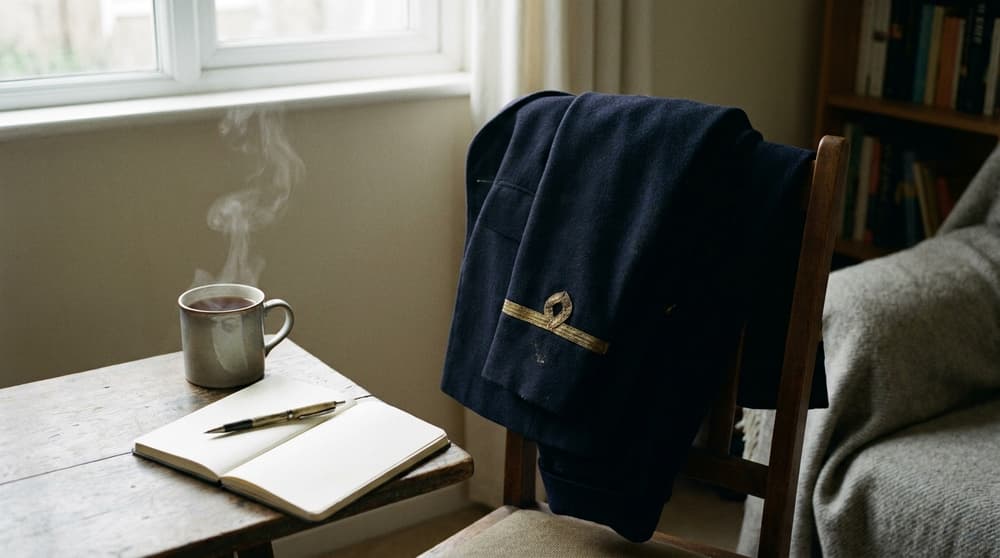
I don't want the rank back. No, that's not entirely honest. I don't want the demands back, but I occasionally miss the ease with which the rank settled my place before I had spoken. Those are different longings, inconveniently packaged in the same old coat.
The quiet humiliation is discovering how often I reach for authority when what I need is ordinary contact. I have commanded a ship; apparently this qualifies me to reorganise six biscuits into a more effective formation. It doesn't. The biscuits were managing adequately before I arrived.
Still, there are moments when I mention the sea too quickly. Then I overcorrect and say nothing, which is another way of making the whole conversation about my own discomfort.
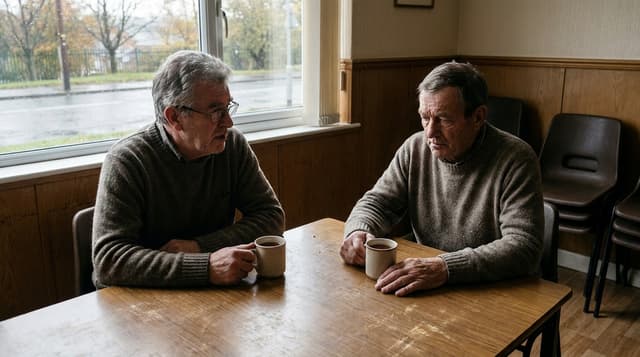
A man at the tea table calls my name. The plain name I wrote. He has no information about my previous responsibilities and seems perfectly willing to hand me a mug anyway. I can listen, ask something I don't know, let a pause remain a pause.
When the rank went, the room did not become empty. It became unscripted, which is harder. What replaced it was smaller than I expected. A neighbour who asks me to look at a gutter. A lad on the harbour wall who wants to know why the tide does what it does. A woman at the bus stop who has decided I am the sort of man who knows about buses.
None of that is a title. It is closer to a description, and descriptions can be revised. That turns out to be the freedom nobody mentions: not the absence of duty, but the absence of a fixed account of yourself.
I still straighten when somebody says captain. It is a good word, and I earned it, and it no longer has to do all the work.
If you retired from a role which carried its own introduction, I'd be interested in what happened when the introduction stopped arriving. When someone asks who you are now, how long is it before the old job quietly clears its throat?
Tea remains the official fuel source of The Old Grey Thinker.
Visit my Eden store: https://dub.sh/eden-store-email