I Escaped Performance Reviews. Then I Put One on My Wrist
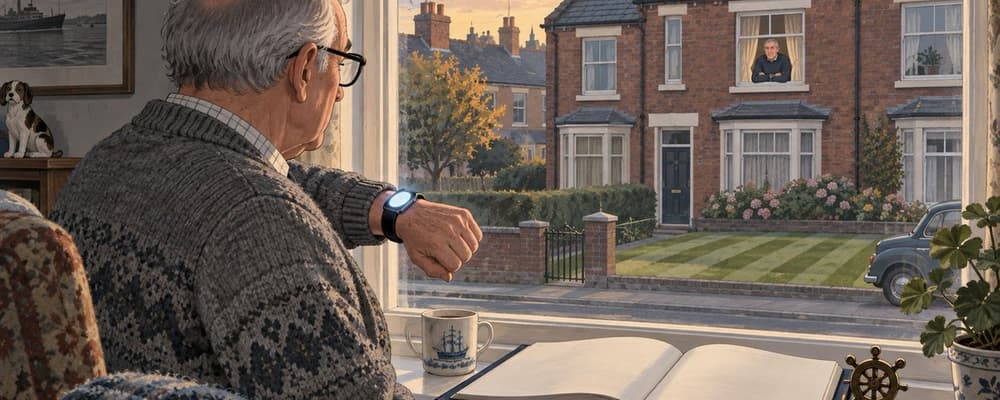
Retirement removed the targets. I seem to have brought my own.
My watch congratulated me for walking to the kettle.
A small celebration appeared on its screen. Apparently I had achieved something. I looked at the kettle, which offered no supporting evidence beyond the usual steam.
There were years when I would have paid good money to escape assessment. Logs, targets, reports. The annual conversation in which two grown adults pretended a form could accurately describe what one of them had done for twelve months.
Now nobody requires any of it. Naturally, I bought a device to count me.
The absurdity is not lost on me. It has simply failed to stop me caring whether the device is pleased.
A little colour, a tidy shape, a number moved towards another number. None of these things should have authority over the feeling of a morning. They are information presented attractively. Yet I can glance at the display and feel either mildly accomplished or faintly behind, depending on how much of the shape remains uncompleted.
Behind what was not a question I asked when buying it. Behind a target. A target supplied by a device or agreed by me at some earlier point. The agreement had looked sensible. The continuing feeling could be less sensible, especially when I was already quite content with the day until the screen reviewed it.
I have walked around the kitchen to improve a number. Not to get anywhere. Not because the kitchen offered a particularly rewarding view on the sixth circuit. To turn an incomplete ring into a complete one.
I left performance management and joined the wrist department.
The department is remarkably portable. It attends breakfast, comes on walks and remains available for consultation when I would otherwise have no reason to consider my recent performance. I can be comfortable in a chair and then remember that the chair has not been contributing much to the display.
That is not the chair's fault. It was manufactured for sitting, not for maintaining my visible progress. I ought to grant it the dignity of doing the job for which it was designed.
The watch isn't the villain. It is a small piece of equipment doing what I asked. The problem begins when I ask it to confirm something it cannot possibly know: whether I have made decent use of being alive this morning.
It knows I've stood up. It has no opinion on why.
That difference should be obvious. A device can record a kind of movement without understanding the experience in which the movement occurred. I might have walked because the weather was lovely, because I needed bread or because I was irritated enough to leave the room. The number may look similar. The days may feel quite different.
A useful measure answers a particular question. How far, roughly? How much movement compared with another period? It does not automatically answer was the outing enjoyable, did I notice anything, was the rest worthwhile or am I becoming an adequate retired man.
I can promote it to that larger job without noticing the promotion. A number which began as a helpful indication becomes the evidence I consult about the whole day. The device has not claimed the authority in words. I have supplied it through the feeling I attach to the result.
At work, measurement had an irritating advantage: it told you that something registered. A decision went into the log. A task was finished. There was a column somewhere in which your contribution could appear, however badly the column represented it.
The column was often crude. Work could involve judgment, patience, prevention and things not done because not doing them was the responsible choice. A simple count struggled with that. Yet the count could still offer reassurance that someone, somewhere, had noticed a contribution.
Retirement removes the column. It doesn't necessarily remove the wish to see your name at the top of one.
That wish can migrate. I started keeping track of books, which sounds harmless until reading begins to feel like stock movement. A short novel becomes attractive for reasons that have nothing to do with wanting to read it. The long one sits there damaging the quarterly results.
I can admire the long book and resent its length in the same glance. There is a page I would like to linger over, but lingering produces disappointing evidence of completion. I could read a sentence carefully or move briskly towards the count which says I have read another book. The activity is named reading in both cases. The attention is doing different things.
A list can be useful. I like remembering what I have read, finding an author again, noticing a subject which has held me repeatedly. Those are good reasons for a record. The trouble begins when the record changes what I choose chiefly because some choices would improve it faster.
The count should follow the interest. Instead the interest can begin following the count.
I do not mean I must select the longest or most difficult book to prove I am free. That would be another performance with a more serious cover. Sometimes I want a short novel. Sometimes I want something easy. The choice is not inferior because the reading is pleasant and the book finishes quickly.
The question is why I chose it. Because I wanted it, or because finishing would make the list look better? Motives can overlap. I don't expect purity. I would simply like to recognise when a harmless record begins issuing instructions about a pleasure it was meant to remember.
Even the garden can become an appraisal. I look at the lawn and assess the stripes as though an inspector might arrive with a clipboard. The inspector never arrives. This does not stop the review.
The lawn has practical needs. I understand that. It is not an entirely philosophical object. But there is a difference between looking after it and making its appearance evidence that I remain a man who does things properly. The latter gives the grass a somewhat surprising role in my relationship with retirement.
It did not apply to be a witness. It is grass, doing what grass tends to do and occasionally requiring attention.
I can enjoy a task completed well. Satisfaction is not the enemy. There is pleasure in a thing made tidier, clearer or more useful through effort. I do not need to turn freedom into a ban on standards. The distinction is whether the standard serves the task or the task serves a continuous trial of my value.
The trial is the exhausting part. I have finished something, therefore I feel briefly justified. Then another unfinished thing appears, and the justification requires renewing. A day becomes a series of applications for permission to feel comfortable.
I think I miss evidence. Evidence that the day wasn't lost. That being free of employment hasn't made me free of all value.
The uncomfortable question is why the evidence has to look so much like work.
Perhaps because the older forms are familiar. A target reached. A task completed. A record updated. I know how to recognise those. A quiet afternoon enjoyed properly has less obvious proof. It can leave me pleased and still difficult to defend in the language I learnt to use for worthwhile time.
I can say I walked for a certain distance. I can say I read a certain amount. It is harder to say I spent an hour noticing something and that seemed good. The latter sounds vague, as if I have failed to keep the necessary account.
But a precise description is not automatically a better description. It may describe the measurable part accurately while leaving out the part which made the hour worth having.
The watch counts movement. It doesn't count the moment I stopped because light on the water caught me. The reading list counts completion. It doesn't count being changed slightly by a paragraph I have not finished thinking about. The lawn inspection sees the surface. It doesn't describe the pleasure of being outside while attending to something ordinary.
None of the measures is wrong within its brief. Each becomes misleading when I let the brief expand without asking whether the new question can be answered that way.
There are days worth having that would fail every one of my improvised tests. A long conversation. An interesting book not yet finished. A walk in which I stop often enough to produce unimpressive statistics and see rather more than usual.
Those are not failed versions of productive days. They are different days. I know this perfectly well when I describe them. I can still feel guilty while living them.
Knowing and feeling have never been the same process. I can write a sensible sentence about freedom and still check whether the ring is complete before allowing the evening to feel settled. The sentence has addressed the idea. The habit has already acquired a much faster route to the emotion.
I don't need to scold the habit to notice it. I can ask what the unfinished ring is actually telling me. A particular target has not been reached. That may be relevant to a goal I chose. It does not establish that the day has been wasted or that the man has failed to make proper use of being retired.
The emotional conclusion is larger than the recorded information. I would like to make it smaller again.
There are genuine reasons to measure. A person may want a reminder, a rough picture of activity or information relevant to a plan. I am not offering medical advice or declaring that anybody should stop using a device which helps them. Different people have different needs, and useful information can support appropriate choices.
This is about the job I have added to my own equipment. I wanted a helpful indication and recruited an evaluator. The evaluator now appears to have opinions about my tea-making, although those opinions are chiefly interpretations of my own.
The kettle would like the minutes recorded accurately. It is doing the actual work while I receive the congratulations.
I have not taken the watch off. I rather like knowing roughly how far I've walked, and a reminder can be useful. I am trying to leave it in the category of useful rather than promote it to judge.
The category matters. A useful object supports a choice. A judge decides whether I should feel approved of after making it. The device can do the first job within limits. The second is an authority I have given it without checking whether it has the relevant knowledge.
It doesn't know why I rested. It doesn't know what the conversation meant. It doesn't know that I took the slower route because I wanted more of the afternoon, not because I had forgotten how to move efficiently.
There is a quiet humiliation in caring so much about approval from something which knows so little about me. It is not personal humiliation inflicted by the device. It is the discovery that the old need to be seen doing enough can survive the removal of the people who used to do the seeing.
I am prepared to create the audience myself. A number, a ring, a column. The absence of a manager has not prevented management from occurring. It has simply made the office smaller and more conveniently attached.
The habit may have useful roots. I wanted to contribute. I wanted to know that effort counted. I liked completing something and knowing where things stood. These are not foolish desires. They helped me work responsibly and can still support activities I care about.
But a desire can change its practical role when the conditions change. The same need for evidence can start crowding a day whose purpose no longer belongs to an employer. I do not have to reject every standard in order to question whether the old style of approval is the right one here.
Some evidence can be lived rather than displayed. I enjoyed that. I understood something. I felt better after the walk. The conversation mattered. These statements are less tidy than counts, but they concern the actual experience rather than a convenient proxy for it.
They may be subjective. The experience is subjective in the sense that I am the person living it. I would like that fact to have some authority instead of treating it as unreliable until a device supplies a supporting number.
A pleasant day does not need an independent certificate of pleasantness.
The count can still tell me something interesting. I can look, notice and decide whether it has relevance. What I needn't do is grant it the first and final word on the quality of the morning. Information is allowed to be information rather than a verdict.
That sounds simple until the screen glows with a small celebration and I discover I am pleased with myself for having gone to fetch a mug.
I can enjoy the celebration without believing its wider implication. The device has registered something. Very well. Now the tea can be the reason I went to the kettle, rather than the movement becoming a new achievement around which the tea is merely arranged.
The difference is small in a kitchen. It becomes larger when I notice the same pattern in several pleasures. Reading for the count. Walking for the ring. Tidying for evidence. An interest can become a task before I have decided that I wanted it assessed.
I would like to keep some interests unassigned.
There is an awkward attraction in completion itself. An open task can feel untidy even when leaving it open is sensible. A ring has a visible gap. A book remains partly read. A corner of the garden looks as though it would benefit from another small effort. The incompleteness asks for attention simply because it can be seen.
A completed shape gives relief. I know where I stand. The gap has gone. There is no need to continue explaining to myself why the thing remains unfinished. I can understand why that relief becomes desirable, particularly when retirement has introduced larger uncertainties which cannot be completed so easily.
What am I for now? What will the next years become? How can I make the open day feel mine? These questions have no tidy ring. A small measurable task offers an answer to something, and the sensation of answering can briefly quieten the questions which remain unanswered.
The relief is real. The answer may concern the wrong subject.
I don't need to reject every small completion because it has offered reassurance. Tasks have value. Progress can be satisfying. A little order can make a day easier. But I would like to avoid asking small completions to settle questions they cannot settle, then repeating them indefinitely because the larger uncertainty returns.
The kitchen circuit is a useful example. I had already moved. I had already lived part of the day. The remaining distance mattered mainly because the display would become tidy. It was not leading me somewhere I wanted to go. It was leading me back to the place I started, with a more approving graphic.
There is an efficiency in that which would have fascinated the old performance department. The destination is the data. The journey can happen beside the sink. No transport budget required.
I can laugh at the arrangement and still recognise how sincerely I wanted the approval. The humour should not make the wanting disappear from the account. I would be pretending to understand something if I described the behaviour as merely silly and left out the reason it was appealing.
It appealed because I wanted the day to count. The phrase itself contains the confusion: count as mattering, or count as producing a number? Those are different uses of the word, and I have allowed one to impersonate the other.
A day can matter without a count. A count can increase without telling me much about the day. Both facts can be true while the device remains perfectly useful for its narrower purpose.
Retirement gives me a chance to choose different questions about the hours. Not only how much, but what was it like? Did I enjoy that route? Did I want to stay longer? Was the rest needed? Is this something I want to return to, or something I completed chiefly because completion reassures me?
The questions are not a replacement appraisal form. I would dislike the outcome if I converted them into one. Rate your enjoyment from one to ten and provide evidence for a higher level of satisfaction next month. At that point the wrist department would have expanded into personal fulfilment and I would be back where I began.
They are occasional checks on whether the tool is serving the life or the life has begun serving the tool.
The answer may be mixed. I enjoyed walking and also liked the number. I read something because I wanted to and also enjoyed adding it to the list. There is nothing terrible in that. Measurement need not poison a pleasure merely by being present.
The troublesome point is when the result becomes the reason I keep doing something whose actual experience has ceased to matter. Continue moving because the ring wants more. Choose the short book because the total wants another. Ignore the pleasant pause because it would make the outing look less efficient.
Then the measure is no longer simply a record. It has become a preference I borrowed without considering whether I still agree with it.
I can reconsider. The target was not a law enacted by somebody entitled to own the afternoon. It was an arrangement intended to help. If it no longer helps in the way I want, I can question its place without declaring myself incapable of discipline.
Discipline can serve a chosen value. It need not consist of obedience to every earlier target because abandoning a target looks untidy. There are commitments I want to keep and tasks I want to complete even when the immediate pleasure is modest. The distinction is whether I recognise the purpose and accept the effort on its behalf.
A ring completed merely because it has a gap may have a purpose too. I might enjoy the small game. That is allowed. The problem would be pretending the game had assessed the whole person and found the day wanting before the final kitchen circuit.
I would like to keep games in the category of games, tools in the category of tools and life in a category broad enough to contain things neither can score.
Rest belongs there. A person can be tired and need rest without first proving that tiredness has been acquired through an acceptable quantity of effort. I still sometimes expect a reason which sounds respectable before allowing myself to stop.
The watch cannot provide the whole reason. It does not know every demand on the body or the mind. A period with little recorded movement may contain effort of a kind its display was not designed to represent. I do not want the narrowness of the record to become a reason for distrusting the broader experience.
This is not a health instruction. If a device, a target or a professional recommendation is part of someone's appropriate care, that belongs to their circumstances. I am considering my own habit of seeking approval, not advising anybody to substitute a general paragraph for guidance relevant to them.
A tool can be helpful precisely when I understand its limits. I can use the information for the purpose it serves and seek other guidance where other knowledge is needed. The authority need not spread simply because the screen is available whenever I look down.
Availability is persuasive. A visible measure is easier to consult than an uncertain feeling. The number arrives complete. My judgment about the day may require thought and remain partly unsettled. I can prefer the clean answer because it offers clarity, even when the clarity belongs to a much smaller question.
The display is tidy. The day is not. I would like to stop expecting the day to become tidy before I can appreciate it.
A long conversation can alter the afternoon in ways I could not measure sensibly. A paragraph can keep returning to mind after the reading has stopped. A walk with pauses can leave a more vivid memory than one completed quickly. These experiences are not inferior because their contribution cannot be summarised by a neatly improving figure.
I know that about other people's lives. If someone tells me they spent an enjoyable afternoon talking, I do not ask how many steps the conversation produced. If someone says a book held them, I don't demand to know whether they reached the final page quickly enough. I can grant them a broader account of value than I sometimes grant myself.
Perhaps that is the account I should borrow instead of the one on the wrist.
The comparison with working reviews is imperfect. A device does not summon me into an office or make decisions about employment. It has no disappointment, no memory of my performance beyond its records and no personal view about the standard I should meet.
That makes the word disappointed a joke, but the feeling it describes can still be mine. I am capable of supplying the manager's tone to a machine which has no tone except the one created by its presentation and my response.
The old manager has retired from paid employment and taken a consultancy role in my interpretation of graphics. He has found a flexible arrangement. I would like him to reduce his hours.
I don't propose a dramatic dismissal. I haven't thrown the watch into the river or stopped recording the books. Dramatic gestures can become another form of evidence, a performance of having escaped performance. I would prefer a change in the relationship which can survive an ordinary morning rather than require a new identity announced to the world.
Look at the number. Know what it describes. Decide whether it matters for what I want now. Return to the actual thing. That is a smaller arrangement, and one I can attempt without making the wrist a symbol of every freedom I have failed to inhabit.
Some mornings it works better. I notice the celebration, smile and make the tea. I leave an incomplete ring alone because the rest of the day has other things I want to do. I continue the long book because the page holds me, not because I have found a way to make its length count as several books.
Other mornings I care too much. I check again. I find a small extra activity which will tidy the graphic. I attach an unhelpful feeling to a record which has supplied no new information. The habit is still here, and I am not going to describe adjustment as a completed project merely because I have written about it.
An adjustment can be repeated. The next glance offers another opportunity to keep the tool in its proper place. I can do that imperfectly without turning the imperfection into yet another metric.
There is a genuine pleasure in freedom from the old reports. I can spend an afternoon without a formal account. Nobody needs a summary before the next day can begin. I can choose work of my own, a quiet activity, a little company or rest, subject to the practical conditions of life but not automatically to an employer's measure.
That is worth protecting. I had wanted it for years. It would be odd to celebrate its arrival and then rebuild the old evaluation system from objects purchased voluntarily.
The rebuilding happens quietly. A list here, a target there, an encouraging graphic. Each looks useful or harmless. Often it is. Together they can supply a complete set of occasions for feeling insufficiently accomplished in a life which was supposed to contain more ease.
I do not need to abolish the objects. I need to notice what authority I have given them. They should not be allowed to certify my worth merely because they are good at recording a small part of my activity.
There is another distinction I keep losing: a measure can be comparable without the experiences being equivalent. One walk recorded against another may have different weather, different energy and different reasons for taking it. The clean comparison makes the untidy conditions less visible.
I can use the comparison sensibly if I remember the conditions. I can use it badly if I imagine the figure has already accounted for them. A smaller result may describe a shorter walk, not a worse man. A longer result may describe extra movement, not a more valuable afternoon.
The same applies to the reading count. One book can take more attention than another. One can invite rereading. One may be abandoned for an entirely sensible reason. Completion records a particular event. It doesn't describe every useful or enjoyable thing which happened before the event, or establish that abandoning was always a mistake.
I have occasionally continued something mainly because stopping would leave the record untidy. That is a peculiar loyalty to a list which was meant to serve my interest. The list has no interest of its own. It cannot be offended. I am the person imagining a judgment and then trying to prevent it.
I would like to make the list a little less socially complicated. Read, record if useful, return to the next thing I want. No fictional librarian in the back of my head inspecting the rate of completion.
There is room for challenge too. I can set a goal because I enjoy trying, because it supports something I care about or because a little structure helps me return. A goal need not be suspicious merely because it contains a number. The important question is whether I still recognise and accept the purpose.
If I do, the measure can be a useful companion. If I don't, perhaps the agreement needs revisiting. Continuing solely because a former version of me chose it confidently is not automatically the responsible course. Circumstances change. So can preferences. A voluntary target can remain voluntary after the first week.
That does not mean I must discard it whenever effort becomes inconvenient. Effort is part of many chosen things. I can distinguish not wanting the moment's difficulty from no longer valuing the aim. The distinction may require thought rather than a bright display, which is another reason not to hand the whole decision to the display.
The broader judgment belongs with the person who knows the purpose, the conditions and the actual experience. That person is not always perfectly informed either. I can be tired, vain or uncertain. But I have more relevant information than a ring, and I should not treat my own account as inadmissible because it is less tidy.
I can grant it a hearing without making every preference unquestionable. I can ask what I want, what I need and what the measure really says. Those are ordinary acts of judgment, qualities I already possess in some form from the earlier life.
They may be more useful now than rebuilding the earlier life's appraisal machinery. I can carry discernment forward and leave the compulsory report behind. The experience need not be discarded when the role ends; it can be used to recognise which new authorities deserve a limited brief.
My wrist department deserves a limited one. It can inform me about some movement. It can offer a reminder. It should not chair the meeting in which I decide whether a river, a book or a warm cup of tea was worth the time I gave it this morning.
An entirely reasonable limitation.
Yesterday I stopped beside the river. The watch would have preferred continued movement.
For once, I let it be disappointed. There was something happening on the water, and I wanted to see it.
I remained long enough for the pause to become part of the walk rather than a delay in completing it. The route was still there when I resumed. The recorded result might have been less tidy than if I had kept moving. The actual experience was more interesting.
I do not need to make that a victory over technology. The device continued doing its job. I had remembered to do mine: decide what deserved attention in a day which partly belonged to me.
The day had practical tasks as well as the pause. There was still a household to maintain, something to read, things I wanted to make. Freedom did not mean the whole afternoon had become weightless. It meant I had a little more choice about which part of the weight deserved carrying now.
The ring could remain imperfect while the water remained worth looking at. The book could remain unfinished while a sentence remained worth considering. The lawn could remain ordinary while the afternoon remained pleasant. These are not excuses for a failed day. They are descriptions of a different kind of success, if success is even the word I need.
Perhaps I don't need that word for every hour. Perhaps some hours can simply be good, difficult, quiet or interesting without immediately entering the competition to become successful.
The kettle has managed this for years. It heats water. It stops. It does not issue an end-of-day account of its contribution to my overall wellbeing. I admire the restraint, particularly when I have just been congratulated for reaching it.
The watch remains on my wrist. I still like some of what it tells me. I would like to become less interested in what I imagine it thinks of me.
There is a difference between information and permission. I can receive the first without waiting for the second. The morning can begin before a number approves it, and a pleasant pause can remain pleasant even when it adds nothing to the count.
Before you wander back into the ordinary noise of the day, do one small thing with this.
Not a grand reinvention. Not a ten-year vision board. Just a quiet refusal to drift.
Because later life has a habit of becoming whatever is left after everyone else has had their say: the pension provider, the calendar, the family WhatsApp, the old job still living rent-free in your head.
The danger is not that you fail to make a plan.
The danger is that you inherit one by default.
If this piece nudged something uncomfortable but useful, I’d start here:
The Second Act Playbook is for building the shape of the next chapter before life fills it in for you.
The Retirement Identity Check-In is for the quieter question underneath it all: who are you becoming when the old labels loosen?
One is Free the other isn’t I will leave it to you to have a look. Neither is about panic.
They are about not waking up five years from now with a tidy pension and a life that somehow forgot to include you.
Also on X: https://x.com/greythinkeruk/status/2113144255711477936