My Pension Balance Wasn't the Only Thing the App Was Taking From Me
Looking after the money and letting it set the mood are different jobs.
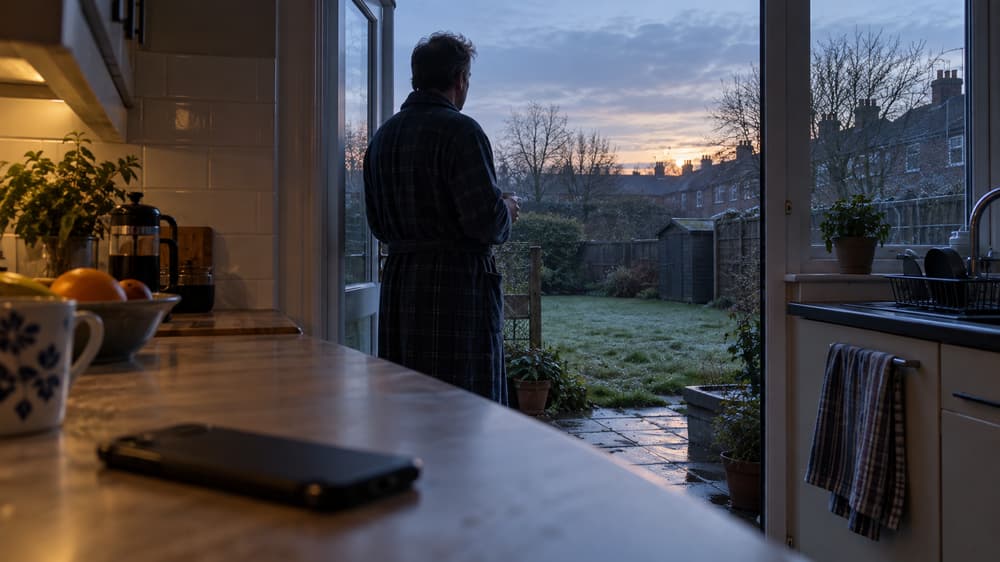
The pension app opened before the tea was ready.
A number appeared. I studied it, although I hadn't yet put my glasses on properly, and allowed it to establish the emotional conditions for the morning.
If it had risen, I felt faintly competent. If it had fallen, I felt personally inconvenienced by the global economy. Neither response had much connection with anything I had done overnight.
Mostly I had been asleep.
The sleeping had been conducted without a financial strategy beyond the usual hope of waking reasonably rested. I had not intervened in events elsewhere. I had not delivered an important statement, altered conditions or made a decision whose result the screen was now recognising. Yet the number could make me feel as though I had been either prudent or careless while unconscious.
This seemed an unreasonable performance review for the hours during which I was least available to perform.
I could see the absurdity and still feel the change in mood. The number was relevant to something real. That relevance gave the feeling a respectable entrance. I was not merely looking at a screen. I was being responsible about money at a stage when responsibility mattered.
The problem was what happened after the entrance. The feeling occupied more of the morning than the information necessarily deserved.
At sea, checking conditions was useful. The forecast could affect what happened next. You examined it because there might be a decision to make, not because watching the numbers was an accomplishment in itself.
The observation belonged to a purpose. Conditions, choices, consequences. A change could require attention, and attention could lead to an act. Even when the decision was to continue as planned, the checking had a relationship with something I was responsible for doing.
Here I was checking a balance before breakfast and then making exactly the same breakfast.
The checking didn't necessarily produce a decision. It produced a mood.
There is a difference between those results. Information can be useful without requiring action immediately, of course. I do not want to pretend that a glance is pointless unless it changes breakfast. But a habit can continue after it has supplied all the information I currently need, repeating chiefly because the next glance might provide a feeling I prefer.
I can call that monitoring. The name sounds responsible. I can also ask what I am monitoring for and what would make the next check useful. If I cannot name either, perhaps I am seeking reassurance rather than information.
The two can look very similar from across the kitchen. A man, a phone, a serious expression. Inside the man, the activity may be quite different.
I don't want to dismiss financial worry. When wages have stopped, uncertainty feels different. Being responsible for money matters. So does seeking qualified advice when you need it. This is not an argument for ignoring accounts, statements or actual decisions.
It is an account of what happened when I confused looking after the money with asking a screen to approve my day.
The approval arrived in the shape of a direction. Up felt better. Down felt worse. There were reasons a change might matter, but my first response often preceded any careful consideration of those reasons. I saw the direction and felt the verdict.
The verdict was personal in a way the number wasn't. I am managing well. I should be more worried. I can permit an ordinary pleasure. I ought to be careful today. The balance had not supplied instructions about the moral standing of my lunch. I had attached them myself.
I am not proud of that attachment. I am also not surprised by it. Money is connected to security, choice and the practical conditions of living. A relevant figure can acquire emotional weight quickly, particularly when the old reassurance of another wage arriving has changed.
The connection deserves respect. The daily interpretation deserves examination.
A concern can be real without every repetition of the concern being useful. I may need an informed review, a clear understanding of circumstances or advice on a decision. Reopening a screen cannot automatically provide those things merely because the subject is financial.
The screen displays some information. My understanding of what matters may require other information, context and appropriate expertise. Availability is not the same thing as sufficiency.
I can have a number instantly and still not have the answer to the question beneath my unease.
That question is often larger: will I be all right? The app cannot settle it completely. No small display could reasonably account for every future cost, change or uncertainty. I have asked it for a kind of reassurance which its narrower job does not promise to deliver.
When it fails to deliver, I can look again. The repetition offers the sensation of attending to the problem. The underlying question remains too large for the act, so the sensation wears off and another check becomes attractive.
That is the pattern I want to recognise, not a universal claim about how often anybody should look at their finances. Different circumstances call for different kinds of attention. A real decision may make information timely. An arrangement may need review. Some people use tools in ways which support a plan they understand and have agreed with appropriate guidance.
I am describing a habit in my own morning, not issuing an instruction about everyone else's accounts.
The habit had begun to make the phone the first authority I consulted about whether the day felt safe to enjoy. Before the tea, before the light, before the ordinary things which were actually present. A figure arrived and the morning was organised around its emotional effect.
The number might matter. The order still seemed worth questioning.
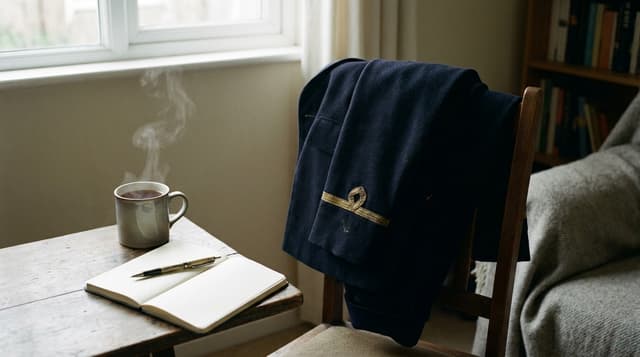
One morning I left the phone face down. Not as a dramatic commitment. I simply made the tea first and looked outside.
A blackbird was dealing with a worm. The transaction appeared to require neither a login nor an updated terms-of-service agreement.
I watched longer than I expected. The morning light was arriving slowly. A bus went past. Somebody opened a gate. Nothing extraordinary. The world I had been failing to notice while conducting surveillance on an abstract line.
For once, the tea tasted of tea rather than of whether the account had behaved itself.
That sounds a little too neat if left there. Put down phone, notice bird, acquire peace. I have encountered enough such stories to become suspicious of how quickly an ordinary action is asked to solve a complicated feeling.
Nothing had been solved financially. The practical circumstances were the same. The question of future security had not been answered by a blackbird, whose expertise in the matter I had no reason to trust. What changed was a small part of the morning: I experienced it before consulting the number which usually supplied the mood.
The change was real precisely because it was limited. I did not need to claim a transformation to recognise that the first cup of tea had been more pleasant.
By late morning, of course, I wanted to look. I would love to present myself as effortlessly enlightened, but my hand kept drifting towards the phone. It felt as though I had omitted a task, although I couldn't explain what the task would accomplish.
The omission had a physical quality. A small pull towards the familiar object. The idea that something might need checking. Not a clear question, not new evidence of a problem, simply the old arrangement seeking its usual place.
I could call it responsibility again. I could also notice that the responsibility had become vague exactly where a useful purpose should have been named.
What would looking do now? It would show me the information available. Did I need that information for something I was about to decide? Not on that particular morning. Was there a reason to believe an immediate matter required attention? Not one I had identified. Was I uneasy? Yes. The unease was the clearest part of the invitation.
That made the distinction more visible. The useful financial inquiry and the attempt to adjust a feeling were not identical, even though both could involve opening the same app.
Checking can feel like control. That is its attraction. A glance gives you the comforting sensation that you are attending to something important, even when attendance has no effect on the thing.
You cannot stare a barometer into better weather. I used to know that. Ashore, with a small screen, I had apparently requested a second opinion.
A barometer supplies information. It does not change the conditions because a worried man has leaned closer. The practical response, if any, belongs to the person considering what the conditions mean for the task. More looking is not automatically more responding.
The distinction travels usefully into this kitchen, provided I don't pretend the two subjects are identical. Financial circumstances have their own questions and sources of guidance. The shared point is about observation and action: a record can inform a choice without the act of observing being mistaken for control over what is recorded.
I cannot supervise an abstract line into feeling more agreeable. I can understand what I need to know, make appropriate decisions with appropriate help and avoid letting repeated observation impersonate those larger acts.
The larger acts may be inconvenient. They can require time, thought and an admission of what I do not understand. A quick glance is easier. It supplies activity which looks related to the concern while avoiding the more specific question which might require a proper conversation.
I would rather recognise that if it is happening. Otherwise I can spend a great deal of attention feeling responsible and remain unclear about the matter I say I am attending to.
There is also a particular shame in wanting reassurance. I imagine a capable man should be able to live with uncertainty without repeatedly asking a number to tell him things are all right. The image is unfair. Capable people can worry. Experience does not remove every sensitivity, and retirement can alter the way an old concern feels.
I don't need to condemn the worry before questioning the habit. I can recognise the concern as understandable and the particular response as not always useful. Those are compatible judgments, gentler and more precise than declaring the man foolish.
The man is trying to protect a life he values. He has selected an easily available method and given it too much authority over the morning. That is a practical arrangement which can perhaps be adjusted at a modest scale.
The adjustment need not be never look. It can be know why I am looking. A question, a purpose, a sensible place in the day. When the inquiry has finished serving that purpose, perhaps the phone can return to being an object rather than the ongoing chair of a committee on whether I should feel comfortable.
I have no wish to prescribe the arrangement to another person. A professional adviser may help someone decide what reviews and information are appropriate for their situation. An essay about tea cannot do that job. My own modest choice concerns what I let a routine glance do to a morning in which no immediate financial decision has been identified.
The limits of the claim matter. They keep a personal observation from becoming careless advice.
The blackbird helped only by being there. I could look at something actual, occurring in front of me, and discover that attention had another place to go. The bird did not require my intervention. Its activity did not offer a forecast about my security. It was a piece of the world I had been overlooking because a more abstract piece seemed entitled to come first.
There was pleasure in restoring the order for a while. The tea, the light, the ordinary street. None was a consolation prize awarded for failing to obtain a reassuring number. Each was part of the life I wanted the money to support.
That is the paradox I keep encountering. I can attend so anxiously to protecting the conditions for living that I lose some of the living occurring inside those conditions. The protection may be sensible. The loss may be unnecessary.
I would like to keep the sensible part and notice where the unnecessary part begins.
Retirement gives time back, and then offers endless opportunities to hand it away again in small, apparently responsible instalments. A check, another check, a comparison, an article whose title suggests I may have overlooked something. The afternoon can become a collection of financial feelings without becoming a clearer financial understanding.
I don't need to refuse information to avoid that outcome. I need better questions about which information is relevant and when the inquiry has done its useful work.
The question might be practical and deserve proper attention. It might be emotional and deserve acknowledgment without another screen. Sometimes it may be both. I can seek appropriate help with the practical part and still recognise that certainty about every future condition is not available from one more glance.
The unavailable certainty can keep me looking indefinitely. A sensible review has boundaries. A wish never to feel uncertain again has none.
I would prefer not to give the second wish an unlimited claim on the morning simply because it speaks in the voice of the first.
There are days when the number rises and the problem is less obvious because the feeling is pleasant. I like the reassurance. I feel a small sense that the arrangement is working and the morning can proceed without an argument. It would be easy to question only the checks which make me uneasy.
But the pleasant verdict can reveal the same dependence. I am asking an external figure to authorise ease before I have considered whether its movement is relevant to the actual day. The permission feels welcome, so I notice the authority less clearly.
I do not want a mood which depends entirely on the screen being agreeable. The practical situation may deserve attention whether the immediate feeling is pleasant or not. A favourable display is not a complete assessment, just as an unfavourable one is not a verdict on every choice I have made.
The direction gives information within its context. I still need to understand the context rather than treat the feeling as the conclusion.
That is something experience ought to support. In work, I would not have accepted a comforting indicator as proof that every relevant condition was fine. Nor would I have treated one concerning indicator as evidence that everything else had failed. The decision required a picture of the situation, not merely the emotional attractiveness of the first figure.
I can bring that respect for context into the new life without recreating the whole working structure. A sensible inquiry, not continuous surveillance. An appropriate source, not a stream of alarming comparisons. A decision when a decision is required, not movement of the eyes mistaken for movement of the circumstances.
The practical judgment is still available in me. The morning habit sometimes acts before it has been consulted.
That speed is part of the attraction. I can know something immediately. Or at least I can see something immediately, which has a similar feeling until I ask whether the seeing has produced useful knowledge. The distinction is easy to miss when the subject already matters.
A screen can display a precise number and still leave a broader question uncertain. Precision at one scale is not certainty at every scale. I can be impressed by the number's clarity and assume it offers more of an answer than it does.
I would like to restore the scale before granting it authority over the tea.
The tea is a small thing. I know that. A reader could reasonably ask whether a warm cup deserves this much attention while serious financial questions exist. But the cup represents the actual experience of a morning, and the actual experience is where the serious questions eventually matter.
I do not save, plan or seek security solely to possess an impressive account. I want conditions in which ordinary life can occur with some ease. Warmth, food, the ability to make choices and respond to practical needs. The day is not an optional decoration around the finances. It is part of what the finances are for.
If I make every morning unpleasant through repeated checking which serves no identified decision, I may be undermining some of the ease I hoped to protect. That does not mean the financial concern is imaginary. It means the chosen response may have a cost which the screen does not display.
The cost is attention, time and mood. Not a fee charged by the app, not evidence of wrongdoing by a provider. The title says the app was taking something because that is how the habit felt. More accurately, I was giving the routine access to parts of the day it did not necessarily need.
That distinction leaves some room for choice. I can consider what access is useful, what access is merely habitual and what I would like to keep for the morning itself.
The choice may be a different order rather than a complete ban. Tea before the app. A little daylight before the figure. A moment in which the current world is allowed to introduce itself without a financial commentary running ahead of it.
I am not going to pretend the order solves a material difficulty. If I have a bill I cannot afford, reversing the order of breakfast will not make it affordable. If an important matter needs attention, I should not hide it behind an appreciation of birds. The distinction concerns an unnecessary mood-setting habit, not the denial of an actual problem.
I want that boundary clear because gentle observations can become unhelpful when offered as substitutes for real support. A pleasant morning is not a financial strategy. It is simply something I value, and it can coexist with appropriate practical attention.
I can do both in the same life. Attend to the arrangements, seek qualified guidance where needed, and allow some hours to remain more than a waiting room for reassurance. The practical and the pleasant need not fight for the right to exist.
There are also mornings when the worry arrives without a screen. I may wake with a question, remember an expense or feel generally unsettled. The phone then becomes a convenient object through which to express the unease, even when the number cannot answer the particular concern.
If that is happening, delaying the glance may reveal the original feeling rather than remove it. That can be uncomfortable. It can also be useful, because I am no longer mistaking the latest display for the source of everything I feel.
What was I concerned about before looking? Is there a practical question I can name? Has the concern become broader than the current circumstances? Would a relevant conversation help more than another check? These are not diagnostic questions or a substitute for support if anxiety is difficult to manage. They are ordinary attempts to identify the thing I am actually asking the object to do.
The object may be unable to do it. Knowing that can prevent an unhelpful repetition, even if another form of help is still required.
I can be kind to the worry without making the app responsible for comforting it. A concern about later life is understandable. A desire for security is not shallow. The fact that I have earned, worked and made decisions for decades does not mean I should now be immune to every uncertainty about money.
Experience can make some uncertainties more visible. I have seen circumstances change. I know a plan can meet conditions it did not fully anticipate. That knowledge is useful when it supports sensible preparation. It can become exhausting when it demands continual reassurance that no unanticipated condition is approaching.
No display can provide that guarantee. I need not keep requesting it merely because the request can be made quickly.
There is a limit to what responsible attention can settle. I can understand more, make choices and obtain guidance. Some uncertainty remains because the future is still the future. Accepting the limit is not the same thing as abandoning responsibility. It prevents responsibility being confused with the impossible task of abolishing uncertainty entirely.
I learnt something similar in the working life. Care mattered. Preparation mattered. Judgment mattered. None made every condition obey the plan. I could respond to reality more effectively when I respected that distinction rather than imagine my vigilance controlled everything it observed.
The small kitchen version is less dramatic. A phone, a number, breakfast. The habit still benefits from the same distinction: I can attend to what is within my practical choices without expecting more looking to control what lies outside them.
I checked later. The account hadn't required my morning supervision to continue existing.
The later check was not automatically wiser because it happened later. Time of day is not a universal answer. The useful difference was that I could notice the act as an act, ask what I wanted from it and avoid letting it establish the entire emotional weather before the day had begun.
The information was still available. I had not been negligent merely because I had made tea first on a morning when no immediate matter had been identified. The practical conditions deserved the same care as before. The routine had received a narrower brief.
That brief may need adjusting again. There will be circumstances in which attention becomes timely. There will be things I need to understand properly rather than simply observe. I am not announcing a permanent schedule or a rule which every future morning must obey.
I am trying to make the attention chosen instead of automatic.
Chosen attention can have an ending. I have asked what I need to ask, seen what the tool can show and identified whether a further inquiry or decision is useful. Then the object can be put down. The rest of the day need not remain on financial standby merely because the number is capable of being consulted again.
Automatic attention lacks that natural conclusion. I look because I looked earlier, because the subject matters, because the phone is near, because an uneasy feeling asks for something to do. Each reason can send me back without establishing what would make returning useful.
The repetition can feel like duty. I would like duty to name its task before claiming another part of the afternoon.
There are duties I recognise clearly. A statement understood. A deadline noticed. A decision approached with appropriate information and help. These are not dismissed by my objection to a mood-setting glance. They are the things which can become harder to distinguish when every small interaction with a figure feels equally responsible.
Giving the useful tasks their own place may make the less useful repetition easier to question. I do not need to feel that avoiding one habitual check means avoiding every practical responsibility attached to the account.
The account exists in a larger financial life. The app is one way of seeing part of it. The morning exists in a larger human life. The number is one fact within it. I would like neither narrow view to pretend it contains the whole arrangement.
Outside, the blackbird was not concerned with my distinctions. It had its own immediate business. I don't claim it was free of uncertainty or living with a philosophy I should imitate. It was simply present in a scene I enjoyed watching.
The pleasure did not need the bird to become an adviser. In fact, I prefer the arrangement in which wildlife remains wildlife rather than being recruited to issue lessons about retirement. It has enough to do.
What it offered was a place for attention. An ordinary event, finite enough to observe, actual enough to be there before I looked at a number. The gate opened, the bus passed, the light changed. I was part of a morning rather than only an audience for a financial display.
I would like more of that participation. Not an escape from information, but a fuller account of where I am and what I have chosen to notice. The phone can remain useful without becoming the principal location of the day.
A piece of the morning had remained mine before the number could lay claim to it. That seems worth noticing.
I say mine with some caution. No day belongs entirely to preference. There are obligations, limitations and events I cannot choose. Retirement is not immunity from circumstance. But it has given some hours more room, and I want to recognise the room before filling it with another apparently urgent routine.
The room can contain practical care and small luxuries. Tea while it is warm. Reading without repeatedly interrupting the paragraph. Going out because the weather invites it rather than because a favourable figure has temporarily made the choice feel permissible.
These are not acts of financial defiance. They are parts of ordinary living. I should be able to make them within an informed understanding of circumstances without asking the latest glance to supply a moral verdict on each.
I have not become consistently good at that. Some mornings the app opens first again. The number appears and the old response is quick. I can recognise what happened without declaring the whole experiment a failure. The next morning remains available for another order.
The aim is a more workable relationship, not a perfect record of restraint. I do not need to replace financial monitoring with continuous monitoring of whether I have monitored too much. That would be a particularly elaborate way to keep the phone in charge after claiming to have set it down.
The change can remain local. Make the tea. Notice the light. Use the tool for a purpose it can serve. Seek appropriate help for questions beyond that purpose. Return to the day when the useful inquiry is finished.
None of this makes the balance behave differently. It may change how much of the actual morning I lose while waiting for the balance to make me feel differently.
One thing the changed order revealed was how much of the morning I had been experiencing in advance. A number fell and I imagined the day as a cautious one before any actual choice had appeared. A number rose and I imagined a little more ease, although the ordinary costs and obligations were not necessarily different from the evening before.
The immediate feeling created a story. The story then coloured the things which happened inside it. A modest purchase looked slightly more worrying. A quiet hour felt less easily permitted. The actual circumstances might deserve careful review, but the routine glance had not performed that review. It had supplied a direction around which I built a whole morning.
I would like the story to wait for more relevant information. There is no need for the figure to become meaningless. It can remain a fact whose meaning depends on context rather than an opening instruction to feel a particular way.
I can see how attractive the instruction is. Feeling certain, even briefly, is easier than remaining undecided about a serious subject. A clear up or down gives uncertainty a visible shape. But the visible shape may be much simpler than the uncertainty it seems to answer.
If I want understanding, I need an inquiry suited to the question. If I want comfort, I should recognise that comfort is what I am seeking and that a narrow figure may offer it unreliably. Naming the purpose can prevent the two needs being confused indefinitely.
Comfort can come from ordinary things without becoming a denial of the practical concern. A warm room, a conversation, the walk I wanted, the tea made properly. None settles the finances. Each belongs to a life in which the finances are one important part rather than the sole event.
I am allowed to experience those parts while remaining responsible about the other one. Responsibility does not require every pleasure to appear after a reassuring screen. The judgment can be informed, thoughtful and still capable of letting the morning begin as a morning.
The old maritime instinct has useful qualities here. Notice what matters. Understand limits. Identify the decision. Seek the relevant knowledge. It does not need to become perpetual observation of something I cannot alter by observing it.
I can retain the useful qualities and reduce the ritual. That is a gentler change than becoming an entirely different man, and probably a more realistic one. The present man will still worry occasionally. He will still like reassurance. He may still open the app before remembering the order he intended.
But he can notice, put it down and allow another part of the world to receive attention. The correction need not wait until tomorrow. A morning which began with the number can still contain tea which tastes like tea later on.
I like that possibility. It leaves room for an imperfect beginning without treating the remaining hours as already coloured beyond repair. The day is not an account which has closed because the first entry was unhelpful. There are other entries available, some practical, some pleasant, some simply ordinary enough to remind me that I am here, in the actual room, with a warm mug and a life which has not been fully described by the figure I saw before breakfast.
For today, that wider account seems more useful than another anxious glance at a display which has already told me what it can.
The app is still installed. I still use it. Some mornings I am better at keeping it in its proper place than others.
Today I made the tea first. Outside, the blackbird was already at work.
I doubt he had checked whether it was a good morning to begin.
Before you wander back into the ordinary noise of the day, do one small thing with this.
Not a grand reinvention. Not a ten-year vision board. Just a quiet refusal to drift.
Because later life has a habit of becoming whatever is left after everyone else has had their say: the pension provider, the calendar, the family WhatsApp, the old job still living rent-free in your head.
The danger is not that you fail to make a plan.
The danger is that you inherit one by default.
If this piece nudged something uncomfortable but useful, I’d start here:
The Second Act Playbook is for building the shape of the next chapter before life fills it in for you.
The Retirement Identity Check-In is for the quieter question underneath it all: who are you becoming when the old labels loosen?
One is Free the other isn’t I will leave it to you to have a look. Neither is about panic.
They are about not waking up five years from now with a tidy pension and a life that somehow forgot to include you.